For a Canadian café, restaurant, hotel or retailer, Shizuoka matcha is more than a name on a bag. It is a sequence of decisions made before the powder reaches the bar, pastry bench or shop shelf: where leaves are grown, how long they are shaded, how they are processed, and how the finished tencha is milled. Understanding that sequence helps purchasing teams choose a grade that fits both their menu and their service style.
WA MATCHA works with Shizuoka-grown leaf through Ryutsu Service Co., Ltd., a producer in Kikugawa, Shizuoka. The story connects mountain gardens, carefully shaded plants, steaming and slow drying, then a different milling route for each grade. For buyers considering Japanese matcha wholesale in Canada, it is a useful way to look beyond the label and ask practical sourcing questions.
Key takeaways
- WA MATCHA’s leaf is grown in Shizuoka across seventeen partner farms in Tenryu, Kikugawa, Kakegawa and Makinohara.
- Leaves are shaded for at least thirty days before picking; this growing method produces tencha, the leaf used to make matcha.
- After picking, the leaves are steamed and dried slowly before milling.
- WA MATCHA Premium is bead-milled, while the Ceremonial grade is stone-milled.
Shizuoka matcha starts with an integrated producer
Ryutsu Service Co., Ltd. is based in Kikugawa, Shizuoka, and was founded in 1905. Now in its fourth generation, the company raises the leaf, processes it and finishes it into matcha itself. In Japan, those three stages usually belong to three different companies, so an integrated approach of this kind is carried by relatively few tea houses.
That structure is central to the origin story. It means the work moves through growing, processing and finishing within one producer’s operation rather than being presented as a collection of disconnected steps. For a food-service buyer, it gives useful context for conversations about the material behind a matcha programme: the leaf and the powder are part of the same continuous process.
The leaf comes from seventeen partner farms across Tenryu, Kikugawa, Kakegawa and Makinohara. These are all Shizuoka-growing areas. The settings are not identical, which is part of why origin deserves attention rather than being treated as a single broad descriptor.
Tenryu’s mountain gardens
Tenryu gardens sit high in the mountains. There, the difference between daytime and nighttime temperatures builds the leaf’s colour and aroma. It is one of the regional details that sits behind the wider Shizuoka name.
For a café or restaurant, that is not a reason to turn sourcing into a performance. It is a reason to explain matcha plainly and accurately when staff or guests ask where it comes from. A concise origin note can connect a latte, a whisked bowl or a dessert to the growing regions without making claims that go beyond the product’s story.
Shizuoka matcha depends on shade before picking
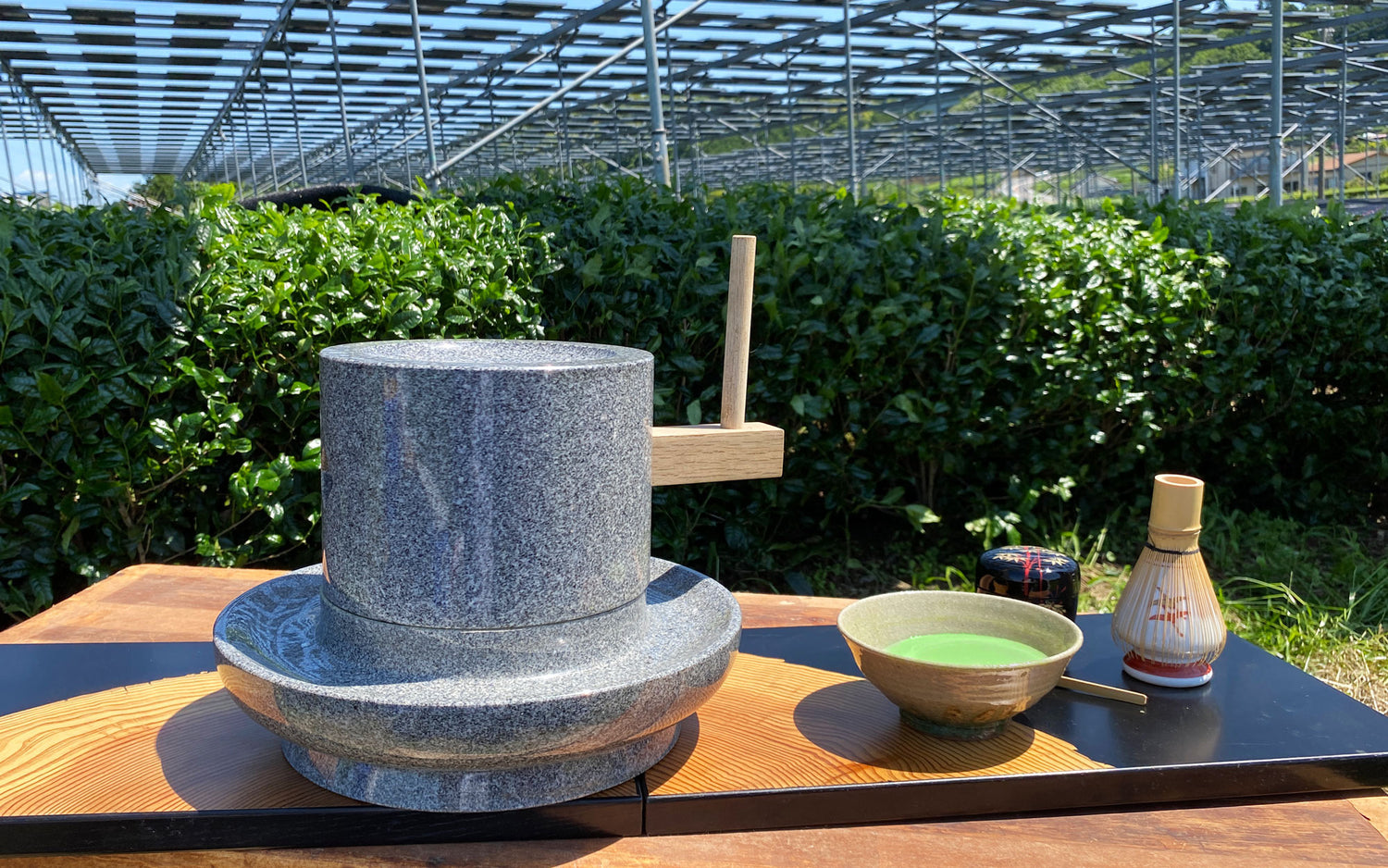
At least thirty days before picking, the plants are covered to create shade. Increasingly, this covering is placed on trellises built under solar panels. The point is not simply to keep direct light away from the leaves. Shading changes the leaf: it raises theanine, the amino acid behind matcha’s sweetness and umami, and lowers catechin, which is behind bitterness. The leaves also turn a deep green.
Leaf grown in this way is called tencha. Matcha can be made from nothing else. This distinction matters because the word matcha describes more than a green powder; it begins with a specific shade-grown leaf and the handling that follows.
For menu teams, the flavour language can stay practical. The shade period provides a clear explanation for the sweetness, umami, green colour and bitterness balance that are relevant when tasting a matcha in milk, pastry or a whisked preparation. It also provides a useful training point: good sourcing questions start with the leaf, not only with the final powder.
A short growing-to-powder sequence
- Grow: Shizuoka leaf is raised with Ryutsu Service’s seventeen partner farms in Tenryu, Kikugawa, Kakegawa and Makinohara.
- Shade: Before picking, the plants are covered for at least thirty days, including with trellises under solar panels.
- Pick and process: Picked leaves go straight to the factory, where they are steamed and then dried slowly.
- Finish: The resulting tencha is milled according to the WA MATCHA grade.
Each step is straightforward to describe, but together they explain why a wholesale matcha decision should include origin, preparation and intended use. Buyers can explore the wider WA MATCHA product range alongside this process when deciding which format belongs on their menu or shelf.
Steam and slow drying protect the next stage
Once picked, the leaves go straight to the factory. They are steamed, then dried slowly. Only after this processing route does the material move to milling.
This order is important in operational terms because it separates the leaf’s growing story from the way a business will eventually use the powder. A bar team may focus on portioning and milk choice; a pastry kitchen may consider how heat changes the final colour; a retail buyer may consider the format that makes sense at the counter. All of those choices happen after the leaf has already been grown, shaded, steamed and dried.
As a general kitchen rule of thumb, heat can fade matcha’s green faster in baking. For creams, glazes, icing and no-bake desserts, Premium keeps a brighter colour. In contrast, baked goods have their own demands for flavour and appearance once the matcha meets flour, fat and heat. The relevant next question is therefore not only “Where is it from?” but also “Which grade suits this use?”
Milling follows the grade and the use
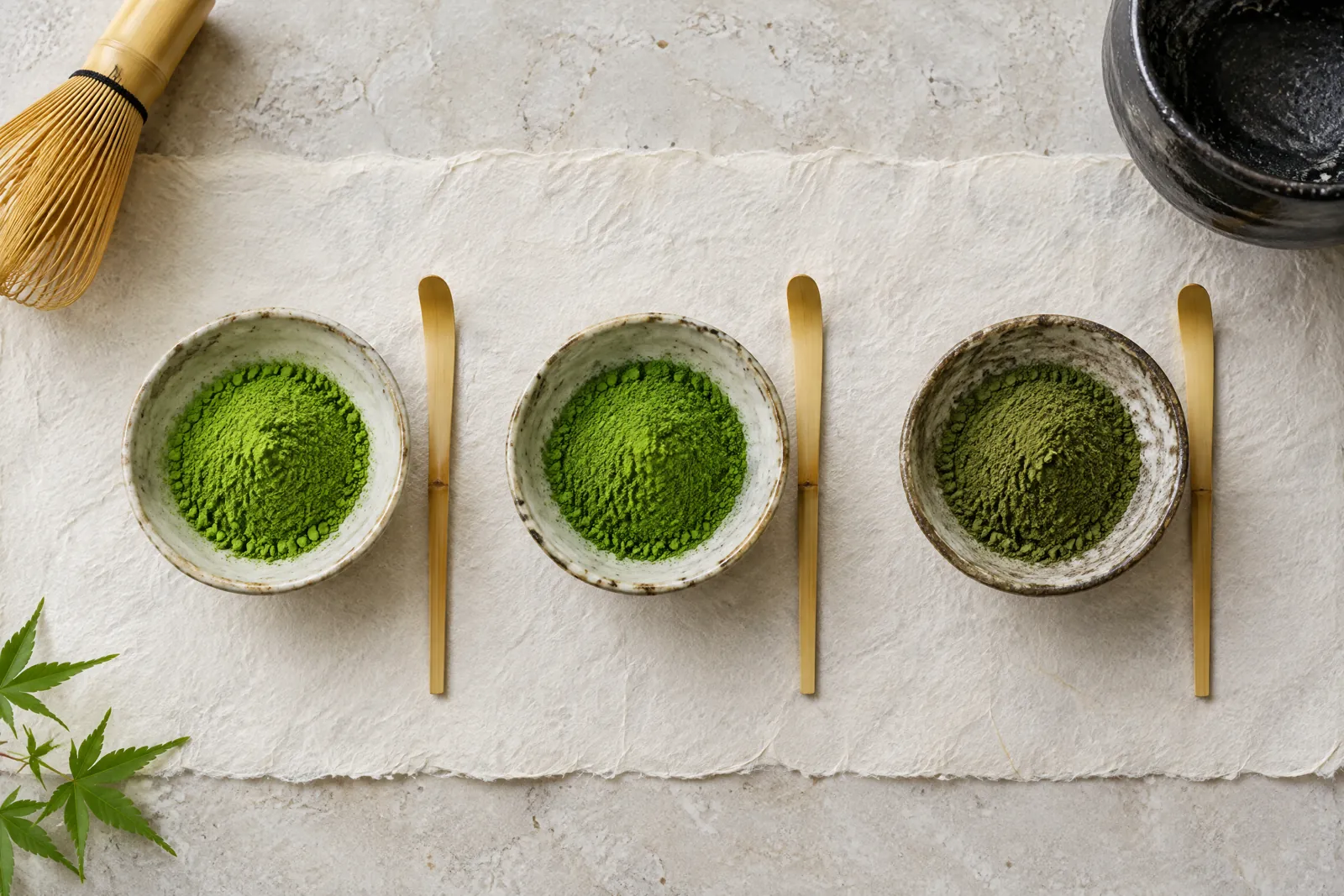
WA MATCHA uses two different milling approaches across its range. Premium is bead-milled. The Ceremonial grade above it is stone-milled. The distinction is specific and should remain clear in staff training, menu notes and buyer conversations.
| WA MATCHA grade | Milling method | Typical role |
|---|---|---|
| Premium | Bead-milled | Behind the bar for lattes and baking |
| Ceremonial “Tsuyuhikari” | Stone-milled | Whisked matcha served on its own |
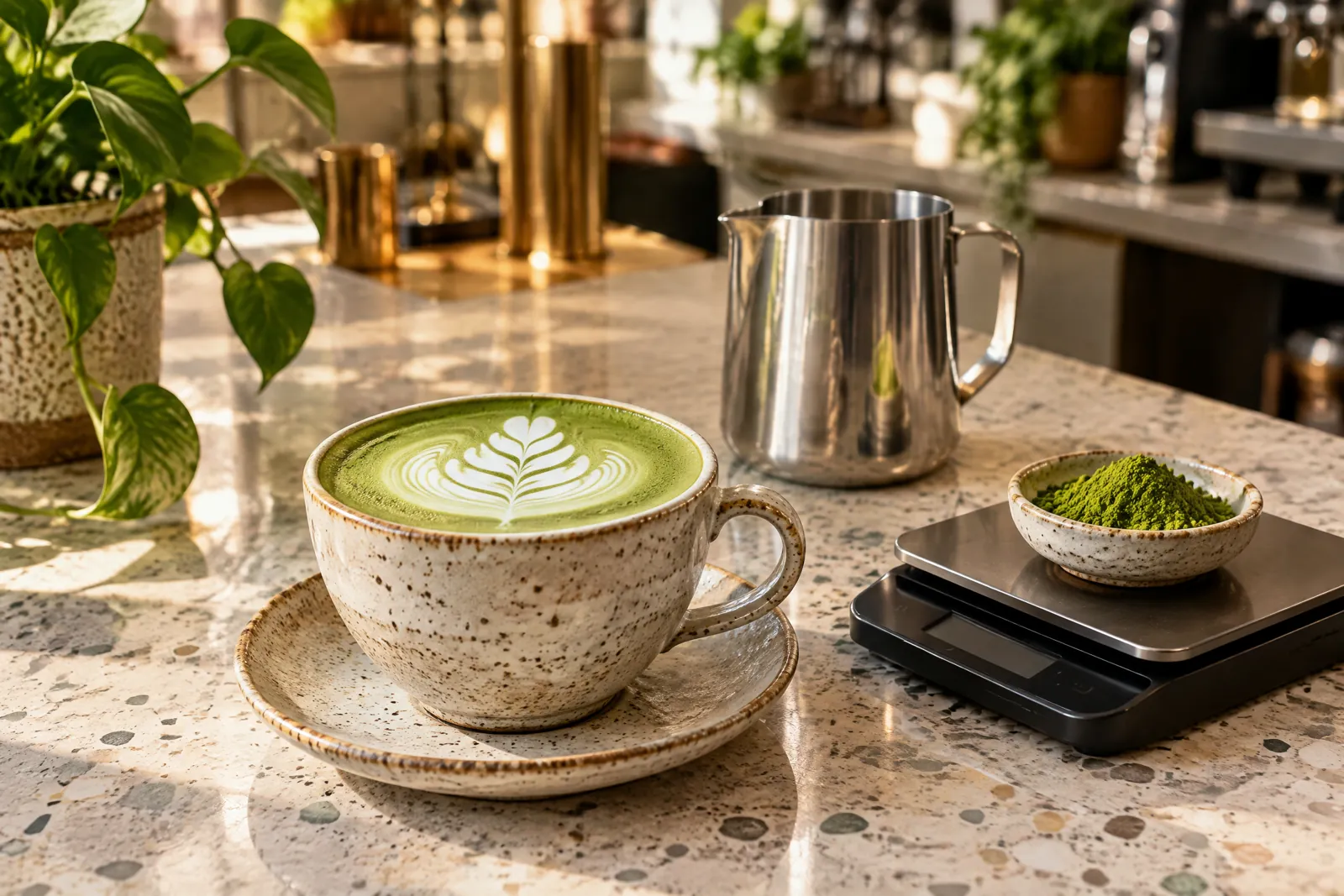
The Premium 1 kg matcha is intended for lattes and baking, while the Ceremonial “Tsuyuhikari” is made to order and intended for whisked matcha served on its own. Matching the product to the application helps a business set a clear standard for staff and guests, rather than trying to make one format do every job.
For example, a standard latte uses about 2 g of matcha. In baking, a useful starting rule is about 3 g for every 100 g of flour. Those are trade-sheet rules of thumb, not a substitute for recipe testing. They do, however, help a buyer begin to estimate the practical role a trade bag may play in a café or kitchen.
The same thinking supports retail choices. A Premium 30 g tin is a standing retail format for shelf and gifting, while the limited Premium and Daily pouches offer smaller counter-basket formats while available. The milling and intended use remain part of the product conversation, whatever the final sales channel.
What this origin story means for Canadian buyers
Origin is most helpful when it leads to a more useful buying discussion. For Canadian businesses, WA MATCHA holds stock in Victoria, BC rather than sending each order from Japan, so supply can move mid-month. Orders can be made by email, phone or the online trade shop, and discounts are available depending on order volume and trading relationship.
A buyer might begin with a simple set of decisions: Is the matcha for high-volume lattes, baking, a considered whisked service, or retail? Does the kitchen need a trade bag or a smaller retail format? Is the priority to trial a product first? Businesses can request free samples and discuss those choices before settling on an order.
The underlying story remains the same: Shizuoka-grown leaf from seventeen partner farms, shaded for at least thirty days, processed through steaming and slow drying, then finished by grade. From the garden to your cup, in one pair of hands.
If you are selecting matcha for a café, hotel, restaurant or retail business, request free samples to start a practical conversation with WA MATCHA.
FAQ
What is tencha?
Tencha is leaf grown under shade before picking. At WA MATCHA’s source, plants are covered for at least thirty days; matcha can be made from nothing else.
How long is the leaf shaded before picking?
The plants are shaded for at least thirty days before picking. The covering is increasingly placed on trellises built under solar panels.
Which WA MATCHA grades use bead milling and stone milling?
Premium is bead-milled for uses such as lattes and baking. Ceremonial “Tsuyuhikari” is stone-milled and is intended for whisked matcha served on its own.