Shizuoka matcha · Our origin
Where our matcha comes from:Shizuoka, Japan.
Our matcha is made by Ryutsu Service Co., Ltd. in Kikugawa, Shizuoka. The house was founded in 1905 and is now in its fourth generation.
One producer, start to finish
They raise the leaf, process it and finish it into matcha themselves.
In Japan those three steps usually belong to three different companies; few tea houses carry all of them. Ryutsu Service does — which is why we can tell a Canadian café, hotel or restaurant exactly where its matcha was grown, how it was shaded and how it was milled.
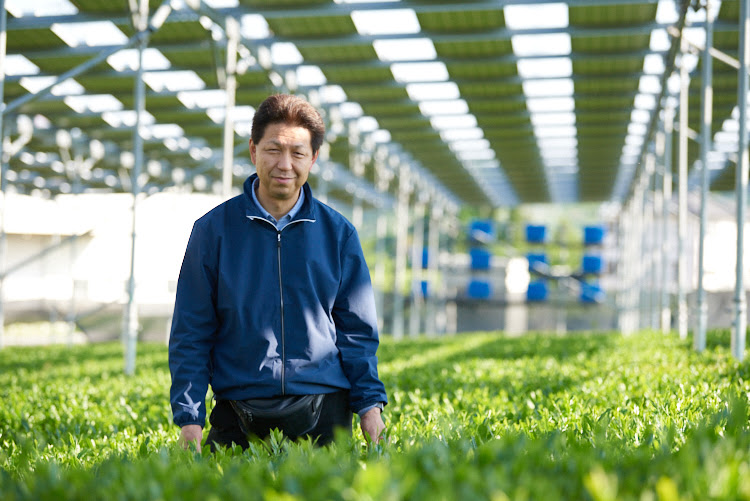
The leaf is all Shizuoka-grown — Tenryu, Kikugawa, Kakegawa and Makinohara — from seventeen partner farms. The Tenryu gardens sit high in the mountains, where the gap between day and night temperature builds the colour and the aroma of the leaf.
1905
Founded
4th
Generation
17
Partner farms
30+
Days of shade
Shizuoka-grown
Four growing areas, seventeen partner farms
天竜
Tenryu
High mountain gardens; wide day–night temperature range
菊川
Kikugawa
Home of Ryutsu Service
掛川
Kakegawa
Partner farms in central Shizuoka
牧之原
Makinohara
Partner farms on the Makinohara plateau
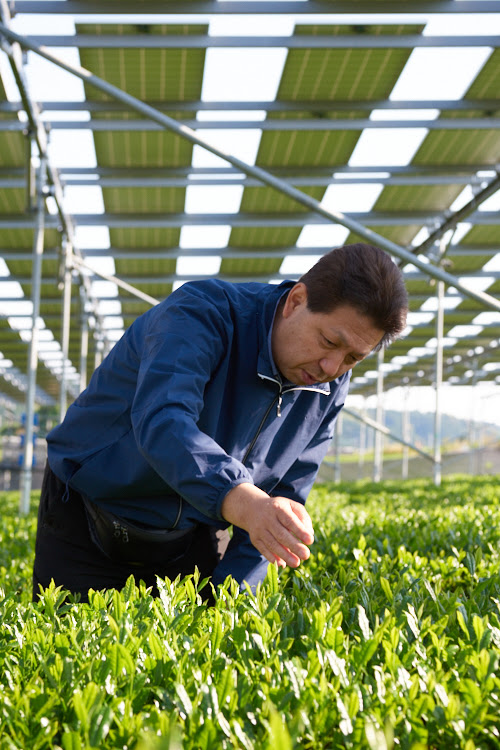
Shaded at least thirty days
Shade is what makes tencha — and only tencha becomes matcha.
For at least thirty days before picking, the plants are covered to keep the new shoots out of the sun; increasingly the covering is done on trellises built under solar panels.
Shade raises theanine, the amino acid behind matcha's sweetness, and lowers catechin, behind its bitterness — and the leaves turn deep green. Leaf grown this way is called tencha, and matcha can be made from nothing else.
Picked leaves go straight to the factory, where they are steamed and dried before milling.
The last step changes with the grade
Bead-milled Premium. Stone-milled Ceremonial.
Premium
Bead-milled
The matcha behind our café and kitchen range — a fine, consistent powder for lattes, iced drinks and pastry.
Premium matchaCeremonial
Stone-milled
The grade above Premium, ground slowly on granite stone mills and made to order.
Ceremonial matcha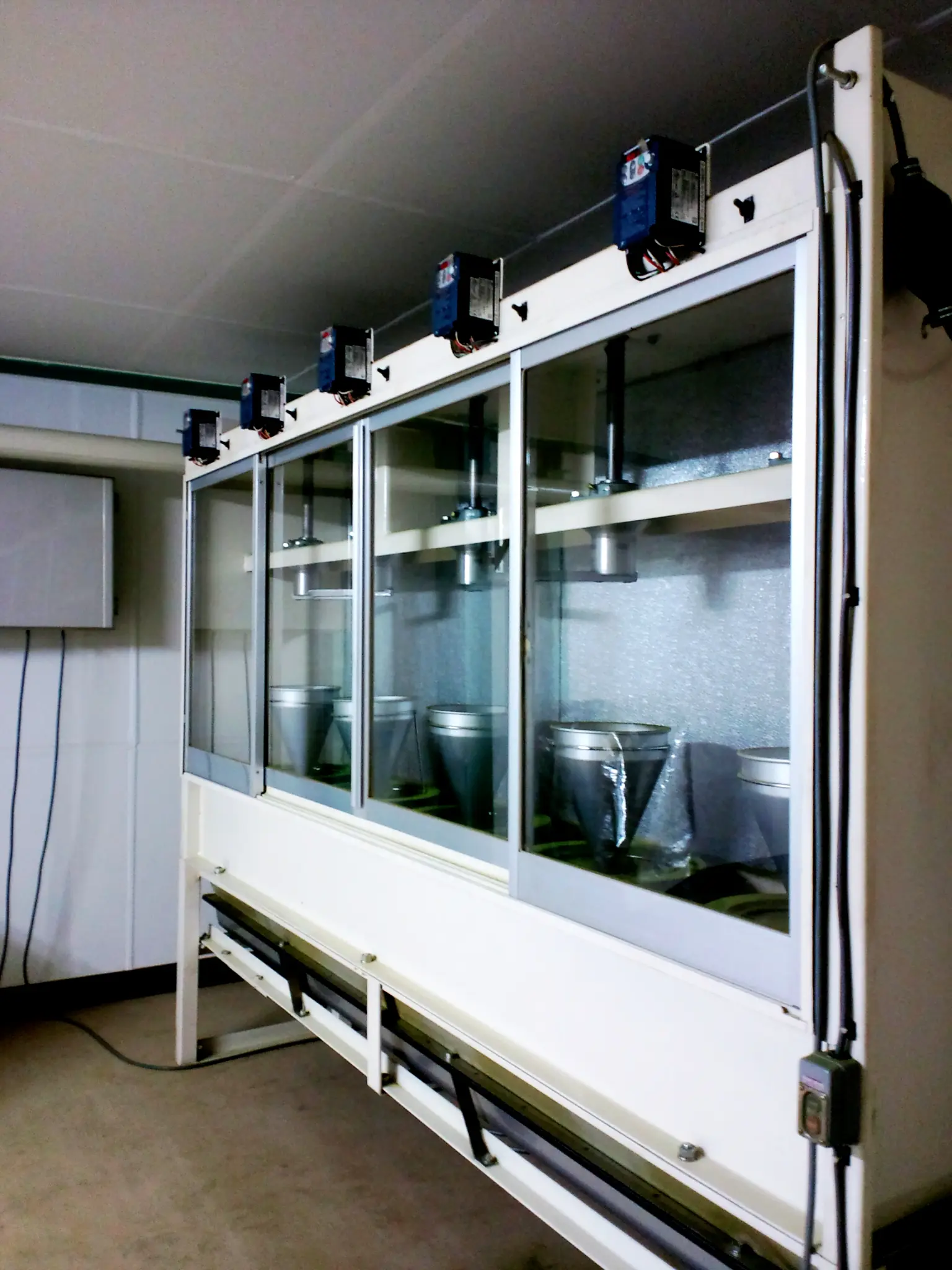
Free samples for businesses
Taste it on your own bar first.
Free samples are available for businesses. Tell us how you serve matcha and we will recommend a grade and size — then send samples from Victoria, BC.