For a café, matcha latte powder wholesale purchasing is most useful when it connects directly to a repeatable cost-per-cup calculation. The tea is a meaningful line item, but it is only one part of the finished drink. A clear method helps an owner or manager protect margin, set a considered menu price and make ordering decisions that suit actual service volume.
The starting point is pleasantly simple: decide on a standard matcha portion, calculate the tea cost for that portion, then add the other known drink costs in your own operation. With WA MATCHA Premium, a standard latte uses about 2 g of matcha. That gives a practical baseline for comparing trade bag sizes and for keeping recipes consistent across the bar.
This guide focuses on the tea calculation, then shows how to use it inside a wider café menu pricing process. For a fuller view of formats, minimums and business enquiries, see WA MATCHA wholesale information.
Matcha latte powder wholesale: begin with the tea
At list price, the calculation for WA MATCHA Premium is as follows:
- Premium 1 kg: $385 ÷ 1,000 g = $0.385 per gram, which rounds to $0.39/g.
- A 2 g latte portion from that bag: $0.385 × 2 = $0.77 per latte.
- Premium 500 g: $245 ÷ 500 g = $0.49 per gram.
- A 2 g latte portion from that bag: $0.49 × 2 = $0.98 per latte.
The difference per drink may look modest, but it becomes easier to see when applied consistently over a month of service. The 1 kg bag has the lower tea cost per gram because the upfront bag price is spread across more matcha. The 500 g bag offers the same Premium matcha in a smaller trade format, which can be useful when a programme is starting, demand is still being established or storage and cash flow call for a smaller purchase.
Published prices are list prices, with taxes and delivery extra. Discounts are available depending on order volume and trading relationship, which can lower the tea-cost figures further. For menu planning, begin with the published calculation, then update your costing sheet with the terms that apply to your account rather than guessing at a discount.
Worked table: matcha latte cost per cup
The table below isolates the matcha component of a standard latte. It uses the same 2 g portion for each bag, so the comparison stays like for like.
| WA MATCHA Premium format | List price (CAD) | Price per gram | Matcha per latte | Tea cost per latte |
|---|---|---|---|---|
| Premium 1 kg trade bag | $385 | $0.39 | 2 g | about $0.77 |
| Premium 500 g trade bag | $245 | $0.49 | 2 g | about $0.98 |
This is tea cost, not final beverage cost. It does not include milk or another chosen base, cup and lid for takeaway service, labour, payment processing, waste, rent or other business overhead. Each café has its own purchase prices, service model and desired contribution from a beverage, so those lines should be added from its own current records. The value of this tea-first calculation is that it creates a stable, visible ingredient input rather than leaving it buried inside an estimated food-cost percentage.
Build a complete café menu pricing view
Once the tea component is set, use one recipe card and one costing sheet for the drink. List every direct input and refresh it when supplier prices change. A straightforward workflow is:
- Record the matcha portion in grams and its current cost from the selected bag.
- Add the measured quantity and cost of milk or alternative base used in the standard recipe.
- Add the packaging used for the relevant service format, where applicable.
- Add labour and the other cost lines your operation uses in menu costing.
- Compare the total with the proposed menu price and the margin approach used across the rest of the drinks menu.
- Review the result after changes to recipe, supplier pricing or service format.
This structure makes cafe menu pricing easier to explain. If a drink is served with 2 g of matcha in one shift and an unmeasured scoop in the next, the café cannot reliably assess its matcha latte cost per cup.
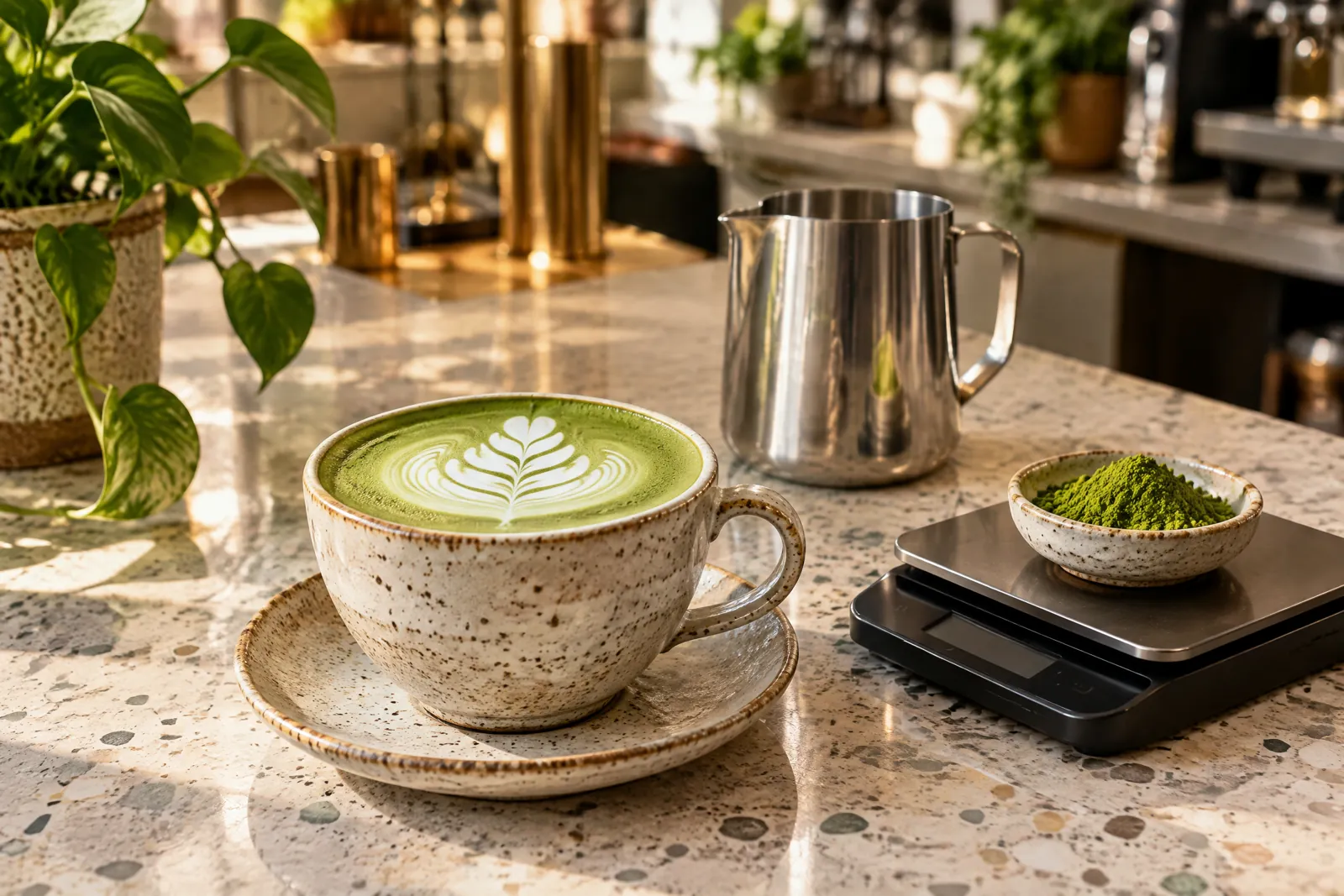
For service, make the intended portion visible and easy to repeat. A small digital scale, a checked scoop and a written bar card can support consistency. Sifting matcha before mixing is a useful general practice for a smoother preparation.
Choose the bag size by monthly usage
Bulk matcha for cafes is not automatically the largest bag available. The right format matches real usage and a manageable purchasing rhythm.
Start by estimating monthly latte volume using sales records, then multiply that count by the standard 2 g portion. That gives the grams of Premium matcha required for lattes before allowing for the café’s own reasonable operational buffer. If that expected usage fits comfortably with a 1 kg bag, the lower list cost per gram makes a strong case for the larger format. If sales are more variable, a 500 g bag can offer a measured way to establish demand using the same matcha.
Separate latte demand from baking demand in this forecast. WA MATCHA Premium is for lattes and baking, while Culinary Blend 500 g is for breads, cakes, cookies and creams. For creams, glazes, icing and no-bake desserts, Premium keeps a brighter colour. As a rule of thumb, store matcha airtight, cool and dark, away from strong odours, and use it promptly once opened.
Consistent supply supports consistent pricing
A menu price is easier to uphold when the café can keep the same tea, portion and staff method in place. Consistent supply also makes margin review more comparable over time.
WA MATCHA holds stock in Victoria, BC, rather than sending each order from Japan, so supply can move mid-month. The matcha is sourced from Shizuoka, Japan, and Premium is bead-milled. Managers planning a dedicated beverage offering can review matcha for cafés.
When demand grows, revisit actual grams used, packaging, current base costs, labour assumptions and bag format, then adjust purchasing, recipe or price deliberately.
Key takeaways
- A standard matcha latte uses about 2 g of matcha, giving a clear base for costing.
- At list price, Premium 1 kg is about $0.77 of tea per latte; Premium 500 g is about $0.98.
- Add milk, packaging, labour and your own operating costs to find the complete matcha latte cost per cup.
- Portion consistency makes the menu price and guest experience easier to protect.
- Choose between 1 kg and 500 g based on monthly usage, not only the per-gram figure.
- Discounts are available depending on order volume and trading relationship.
For support in selecting a trade format or to taste the matcha in your own drinks programme, businesses can request free samples through WA MATCHA contact.
FAQ
How much matcha should a café use in a latte?
WA MATCHA’s trade rule of thumb is about 2 g for a standard latte. Using that portion as the recipe standard gives a useful starting point for costing and training; a café can then test and document its preferred preparation method.
What is the matcha latte cost per cup from a 1 kg bag?
At the published Premium 1 kg list price of $385, the tea costs about $0.39 per gram. A 2 g portion is therefore about $0.77 per latte, before milk, packaging, labour and other business costs.
Is the 1 kg or 500 g Premium bag better for a café?
The 1 kg bag has the lower published tea cost per gram, while the 500 g bag can suit a lower or less predictable monthly volume. Calculate expected usage from recorded drink sales and choose the format that fits the café’s operating rhythm.