Choosing a wholesale matcha supplier Canada food businesses can depend on is not simply a price comparison. For a café, hotel or restaurant, the choice shapes drink flavour, kitchen results, menu costing and the confidence of the team placing the next order. A useful supplier should make origin, grade, ordering terms and the route to your door easy to understand.
This checklist gives purchasing teams the questions to ask before committing. It also sets out the verified information WA MATCHA makes available, helping Canadian buyers compare offers on practical details rather than broad claims.
Key takeaways
- Trace the product from leaf growing through processing and milling.
- Match the grade and milling method to the drink or food application.
- Compare published list prices, volume-based wholesale discounts and minimums together.
- Confirm Canadian stock, sampling and a direct ordering route.
Wholesale matcha supplier Canada checklist
1. Can the supplier explain the origin from leaf to finished matcha?
Origin is more useful than a place name alone. Ask where the leaf is grown, which company processes it and who mills the finished matcha. The answers give a clearer picture of the supply path and a better basis for discussing flavour, grade and availability.
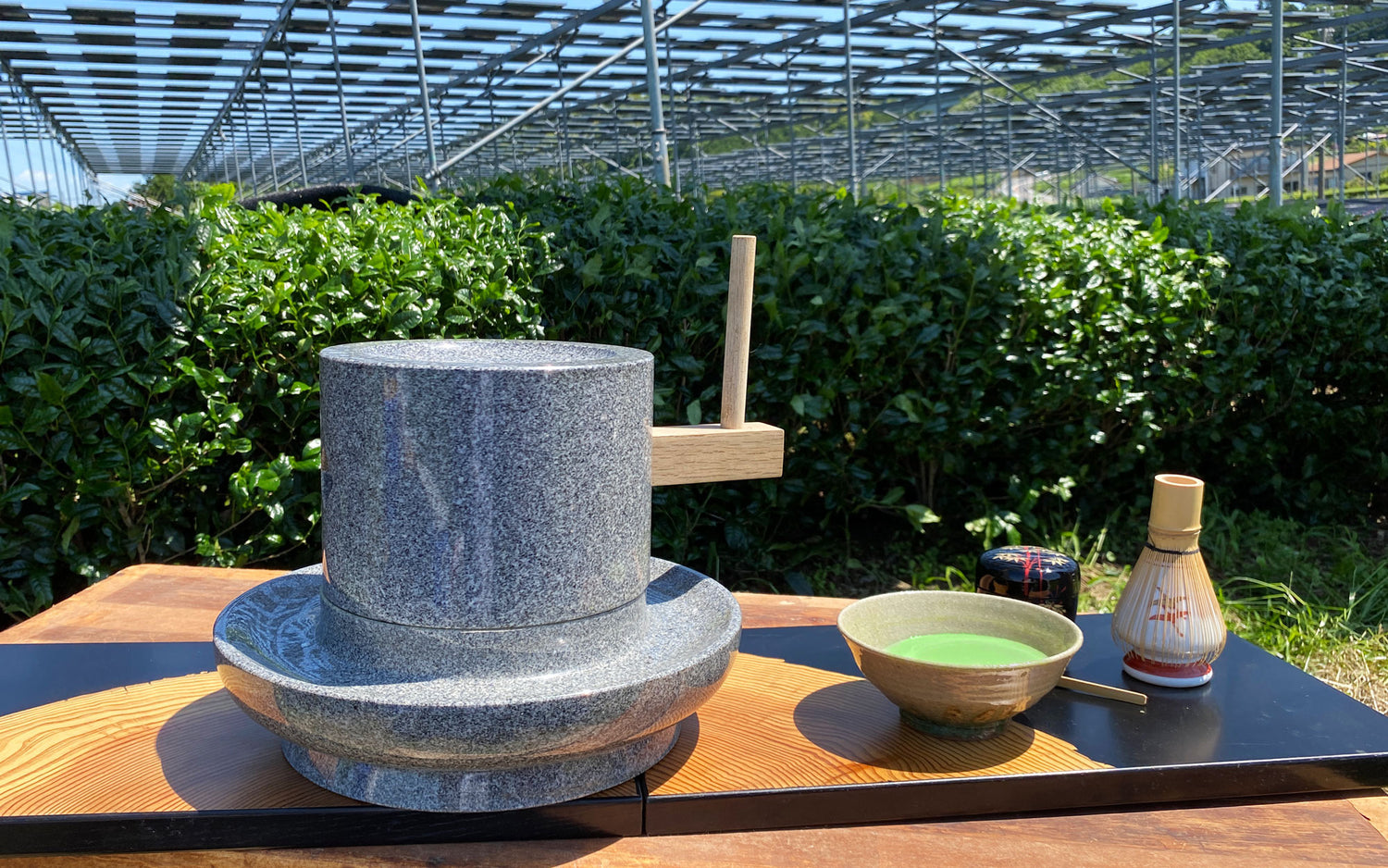
WA MATCHA supplies matcha from Shizuoka, Japan: Tenryu, Kikugawa, Kakegawa and Makinohara. Its leaf comes from 17 partner farms. Producer Ryutsu Service Co., Ltd., in Kikugawa, was founded in 1905 and is now in its fourth generation. It raises the leaf, processes it and finishes it into matcha itself; in Japan, these three stages usually belong to separate companies.
The plants are shaded for at least 30 days before picking. Shading raises theanine, the amino acid associated with matcha’s sweetness and umami, while lowering catechin, which is associated with bitterness. The picked leaves go straight to the factory to be steamed and dried slowly. Read how WA MATCHA’s Shizuoka matcha is made for the full origin story.
2. Are grades described by intended use?
A grade name should help a bar manager or chef decide where the matcha belongs on the menu. Ask the supplier to state the intended use of each grade alongside its format and price. It is a more practical way to protect margins than choosing by a vague label.
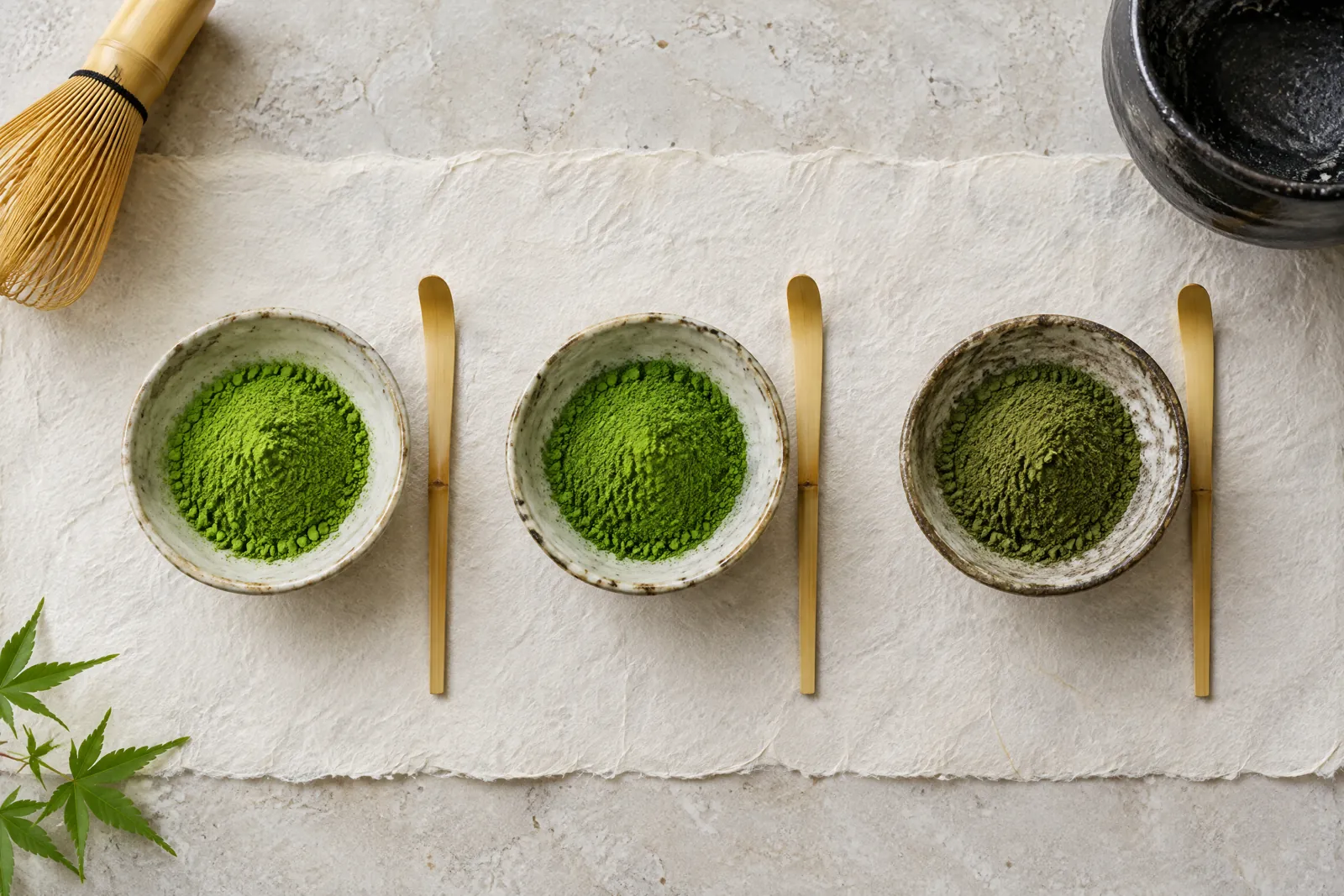
WA MATCHA sets out its range by application. Ceremonial “Tsuyuhikari” is for whisked matcha served on its own. Premium is for lattes and baking. Culinary Blend is for breads, cakes, cookies and creams. For creams, glazes, icing and no-bake desserts, Premium keeps a brighter green colour; heat can fade matcha’s green more quickly in baking.
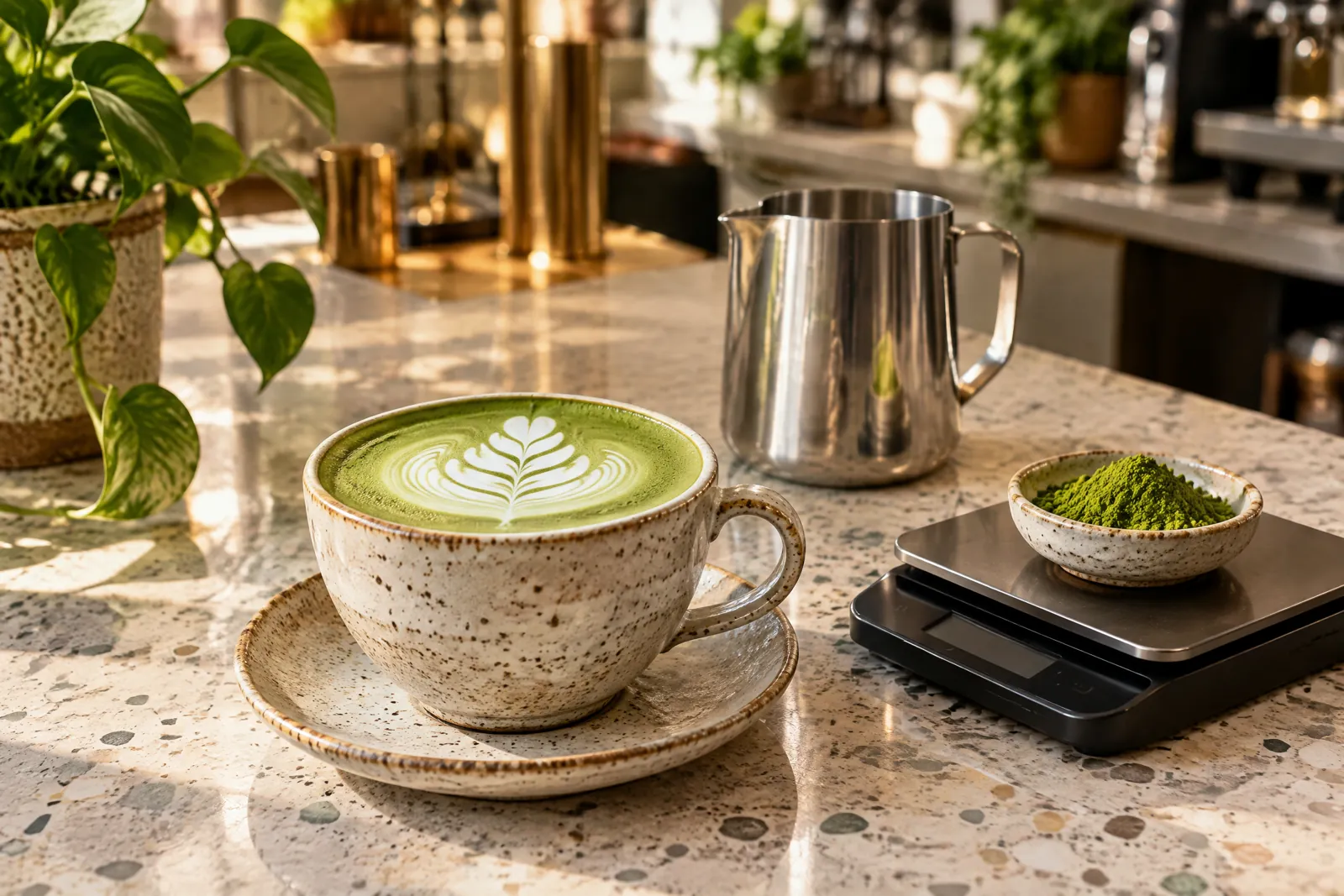
As a recipe-planning rule of thumb, a standard latte uses about 2 g of matcha. Most baking sits near 3 g for every 100 g of flour. Teams should use these figures as a starting point and test their own recipes.
3. Is the milling method specified for every grade?
Milling is part of the product specification, so it should be stated precisely. Ask which grade uses which method, then judge that fact alongside its intended application rather than treating milling language as a general marker of value.
WA MATCHA makes the distinction clearly: Premium is bead-milled, while Ceremonial is stone-milled. Ceremonial “Tsuyuhikari” comes in a 100 g format, is made to order and is milled on request, so buyers should discuss timing before planning service. This matters for hotels and cafés building a whisked offering alongside latte service. The matcha programme for cafés offers an application-focused starting point.
4. Are pricing and cost-per-use clear?
Published pricing lets a purchasing team build a first cost model before a trade conversation. Compare the bag or tin format, list price, menu use and the supplier’s wholesale approach. Keep the listed price separate from any trade discount.
WA MATCHA publishes Autumn Harvest 2026 prices in Canadian dollars; taxes and delivery are extra. Premium is $385 for 1 kg and $245 for 500 g. At list price, the 1 kg bag is about $0.39 per gram, or approximately $0.77 for a latte using about 2 g. The 500 g bag is about $0.49 per gram, or approximately $0.98 per such latte. Compare the Premium 1 kg trade bag with your expected volume.
| Format | Published list price | Practical use |
|---|---|---|
| Premium 1 kg | $385 | Lattes and baking |
| Premium 500 g | $245 | Lattes and baking |
| Culinary Blend 500 g | $120 | Breads, cakes, cookies and creams |
| Ceremonial “Tsuyuhikari” 100 g | $240 | Whisked matcha served on its own |
Culinary Blend is approximately $0.24 per gram, or about $0.72 per 100 g of flour at around 3 g per 100 g of flour. WA MATCHA also offers a Premium 30 g Tin at $45, a Premium 20 g Pouch at $18 while available, and a Daily 20 g Pouch at $12 while available. Discounts are available depending on order volume and trading relationship.
5. Do the minimums work for your purchasing pattern?
Minimums affect cash flow, storage and the pace of a first test. Ask whether they apply per format, per bag or across the order, and whether a made-to-order item follows a different process.
WA MATCHA trade bags can be ordered from one bag. Culinary Blend has no minimum, so one 500 g bag is a valid order. Premium 30 g Tins are sold in sixes, with a minimum of six tins. Ceremonial is made to order. These terms give a café, hotel or bakery a clear way to start a kitchen test, set a latte specification or add a retail format.
6. Can the team sample before a menu roll-out?
A product brief cannot replace a service trial. Bar teams need to assess mixing and flavour in their usual milk or alternative, while pastry teams need to see how a recipe behaves. The sampling route should be simple and suitable for business evaluation.
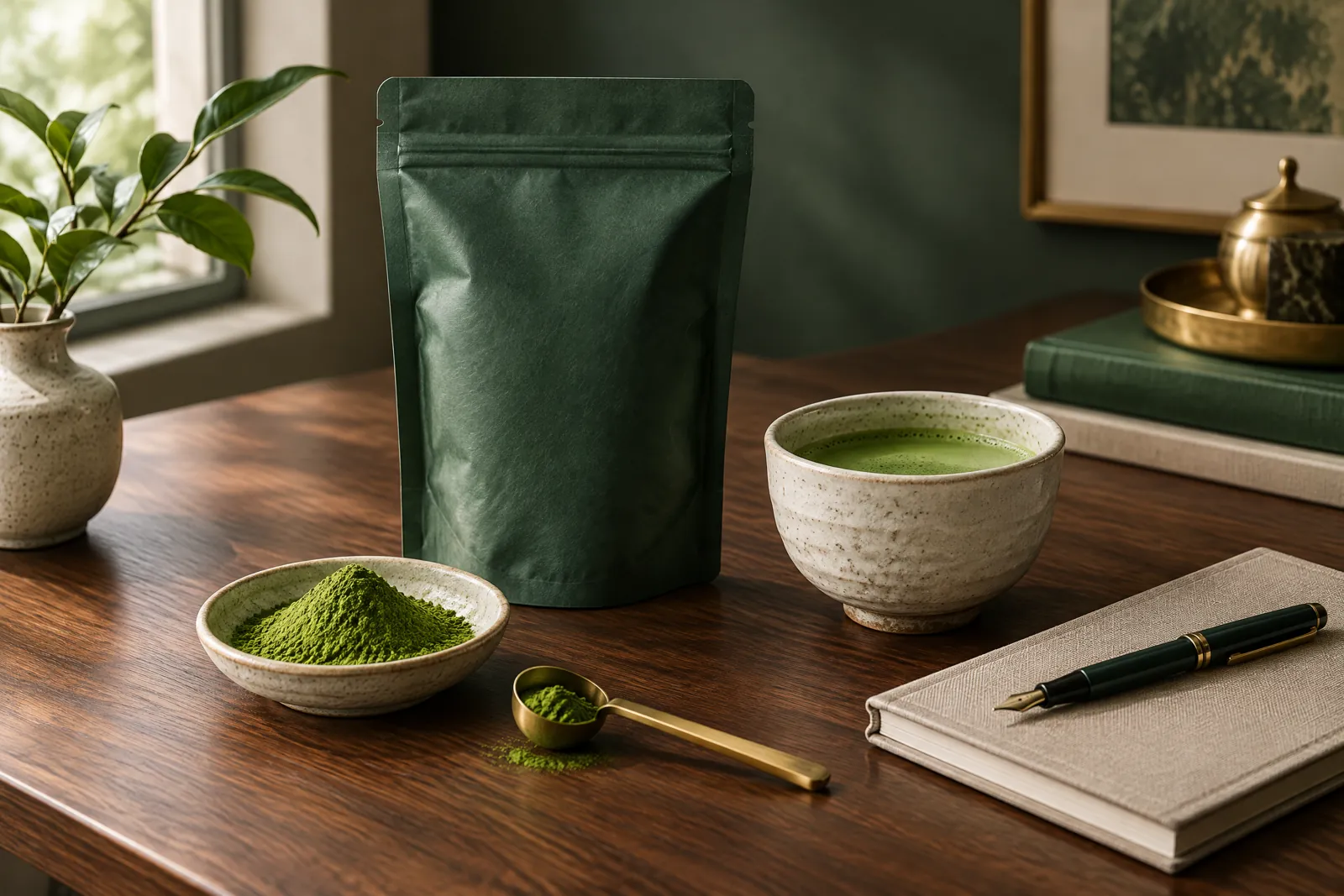
WA MATCHA offers free samples for businesses. Cafés, hotels, restaurants, bakeries and retailers can test the matcha in the application that matters to their operation before making a larger purchase. The Premium 30 g Tin is a standing retail format for shelf and gifting; the limited Premium and Daily pouches offer smaller counter-basket formats while available.
7. Is stock held locally, with direct communication?
Confirm whether the supplier dispatches from Canadian stock or sends each order from Japan. Local inventory can matter when a team needs supply mid-month after a menu launch or change in demand. It should also be clear how to request terms, ask questions and order.
WA MATCHA holds stock in Victoria, BC, rather than shipping each order from Japan, so supply can move mid-month. Orders can be placed by email, phone or the online trade shop. WA MATCHA supplies businesses across Canada, including teams seeking a matcha supplier in Victoria, BC or wholesale matcha for Vancouver operations. Each WA MATCHA stockist receives a personalised “Certified Partner” certificate to display in-store.
Put the checklist into a purchasing decision
Use a short, documented comparison: map each product to a menu use, calculate a starting cost per drink or recipe, confirm the minimum and stock location, then run a sample trial with the people who will prepare it. Discuss timing for made-to-order Ceremonial and the volume at which wholesale discounts may be available.
For a Canadian food business, traceability and usable trade information belong together. WA MATCHA provides a documented Shizuoka supply story, grade-specific milling information, published list prices, clear starting minimums, business samples and Victoria-held stock. These details give buyers a framework for comparing any matcha wholesale Canada offer on its merits.
Ready to assess matcha for your café, hotel, kitchen or retail shelf? Request free business samples or review wholesale pricing, minimums and trade enquiries to start the conversation.
FAQ
What should a café ask before choosing a Japanese matcha wholesale supplier?
Ask for the growing and production origin, intended use for each grade, milling method, published list prices, wholesale discount approach, minimum order quantities, sampling process and Canadian stock location.
Which WA MATCHA format suits lattes and baking?
Premium is intended for lattes and baking in 1 kg and 500 g trade bags. Culinary Blend is intended for breads, cakes, cookies and creams. A standard latte uses about 2 g as a rule of thumb; baking commonly uses around 3 g per 100 g of flour.
How can hotels and retailers start working with WA MATCHA?
Businesses can request free samples, then order by email, phone or the online trade shop. Trade bags begin at one bag, Premium 30 g Tins begin at six tins, and Ceremonial is made to order. Contact WA MATCHA to discuss timing and wholesale terms.