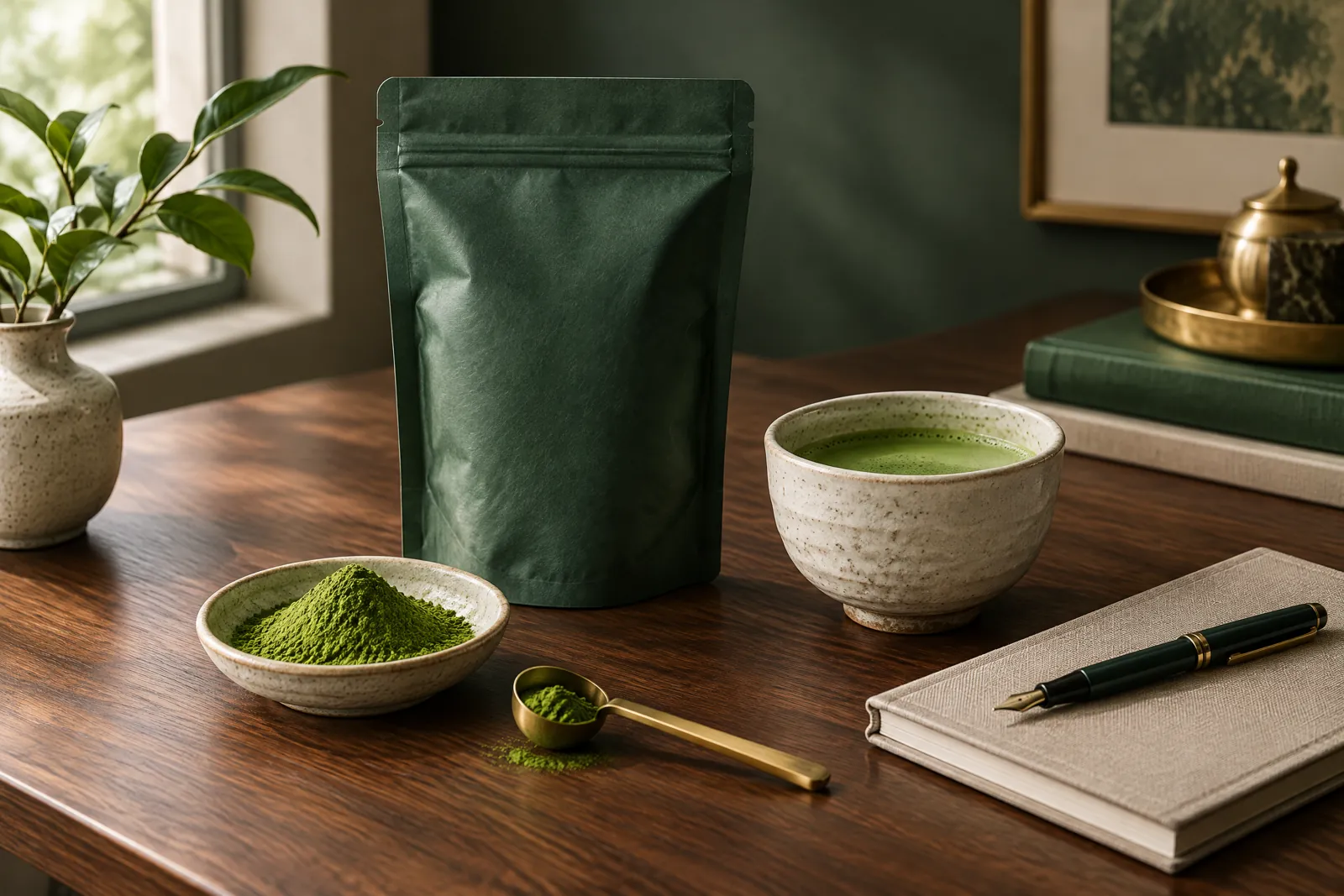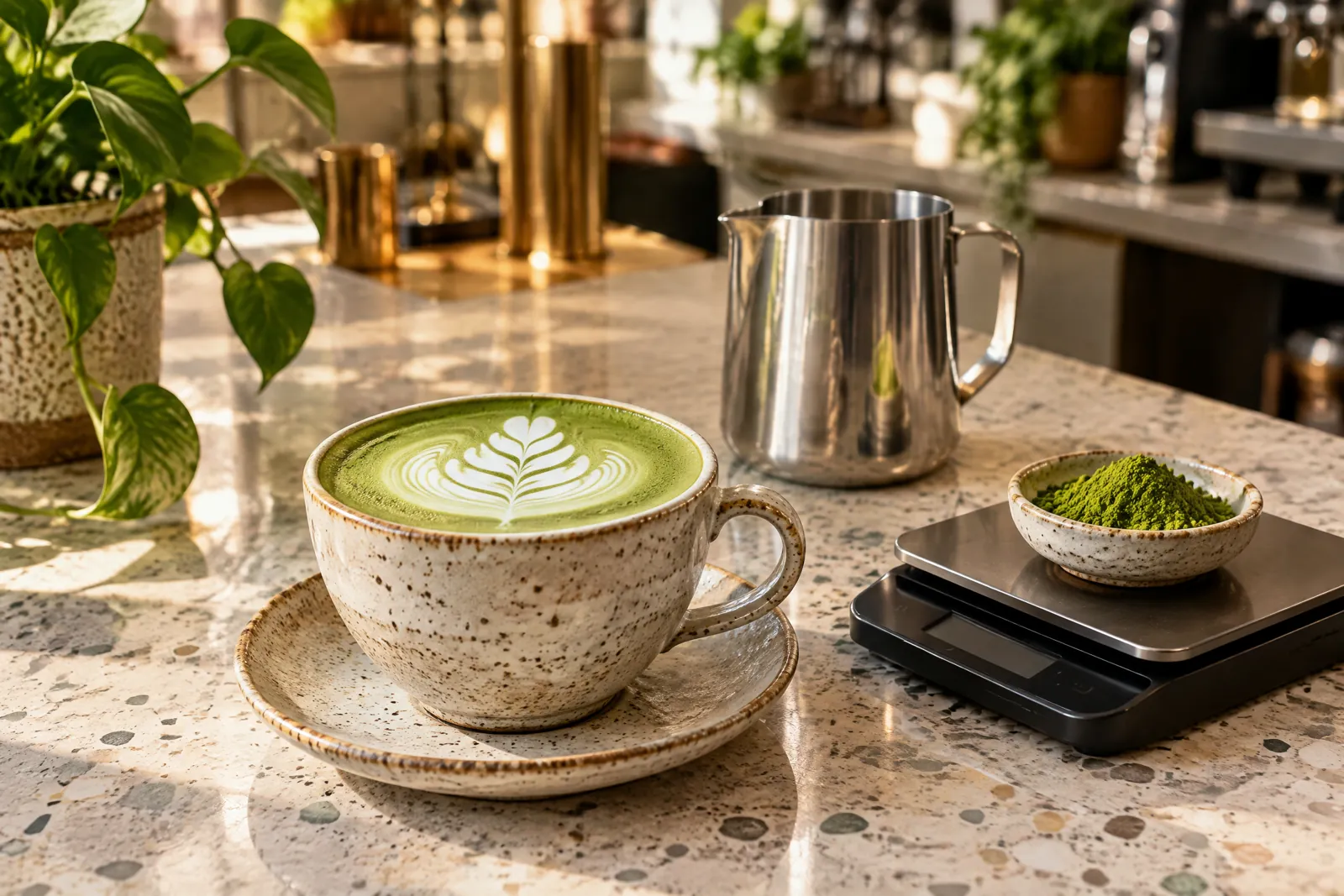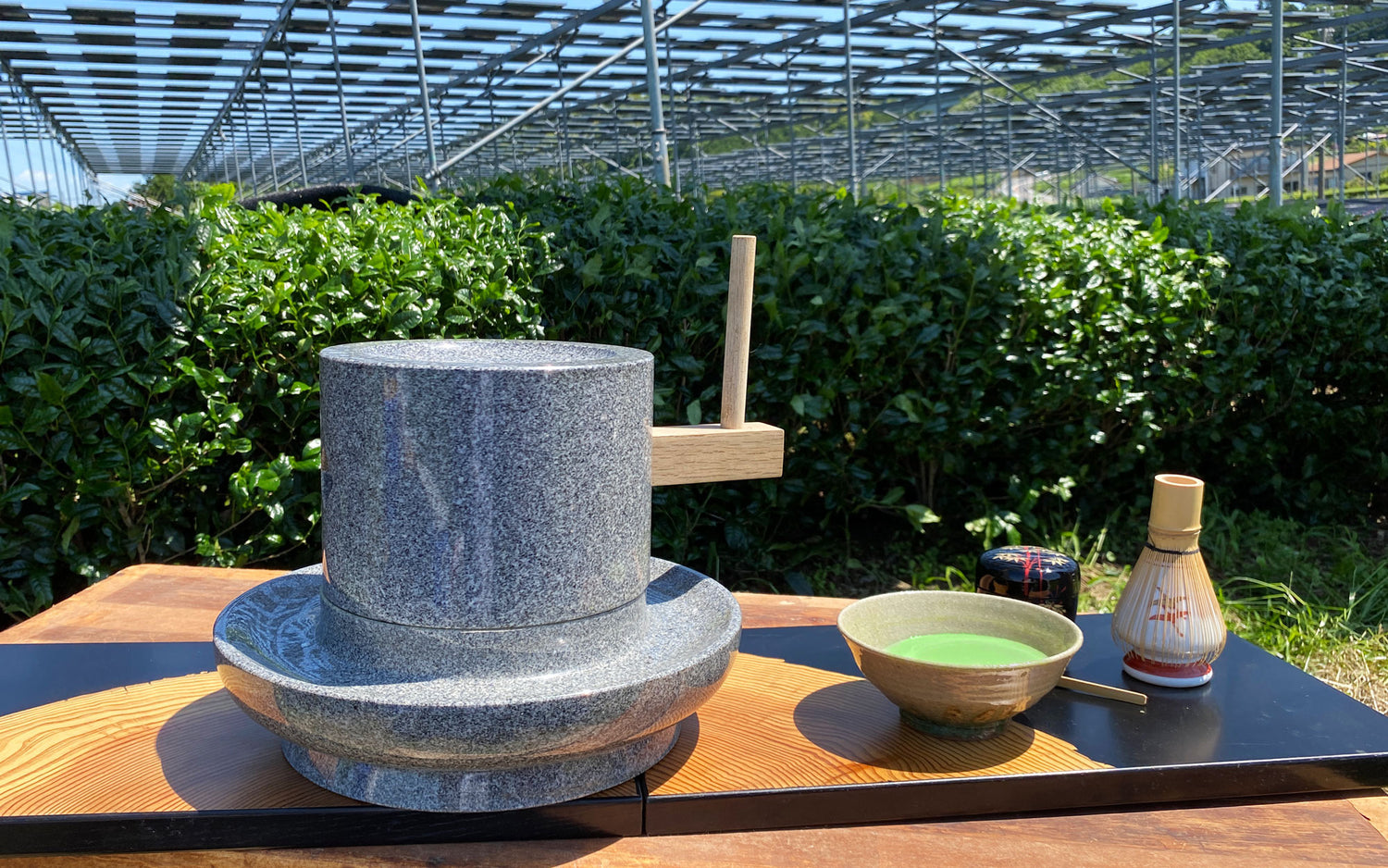
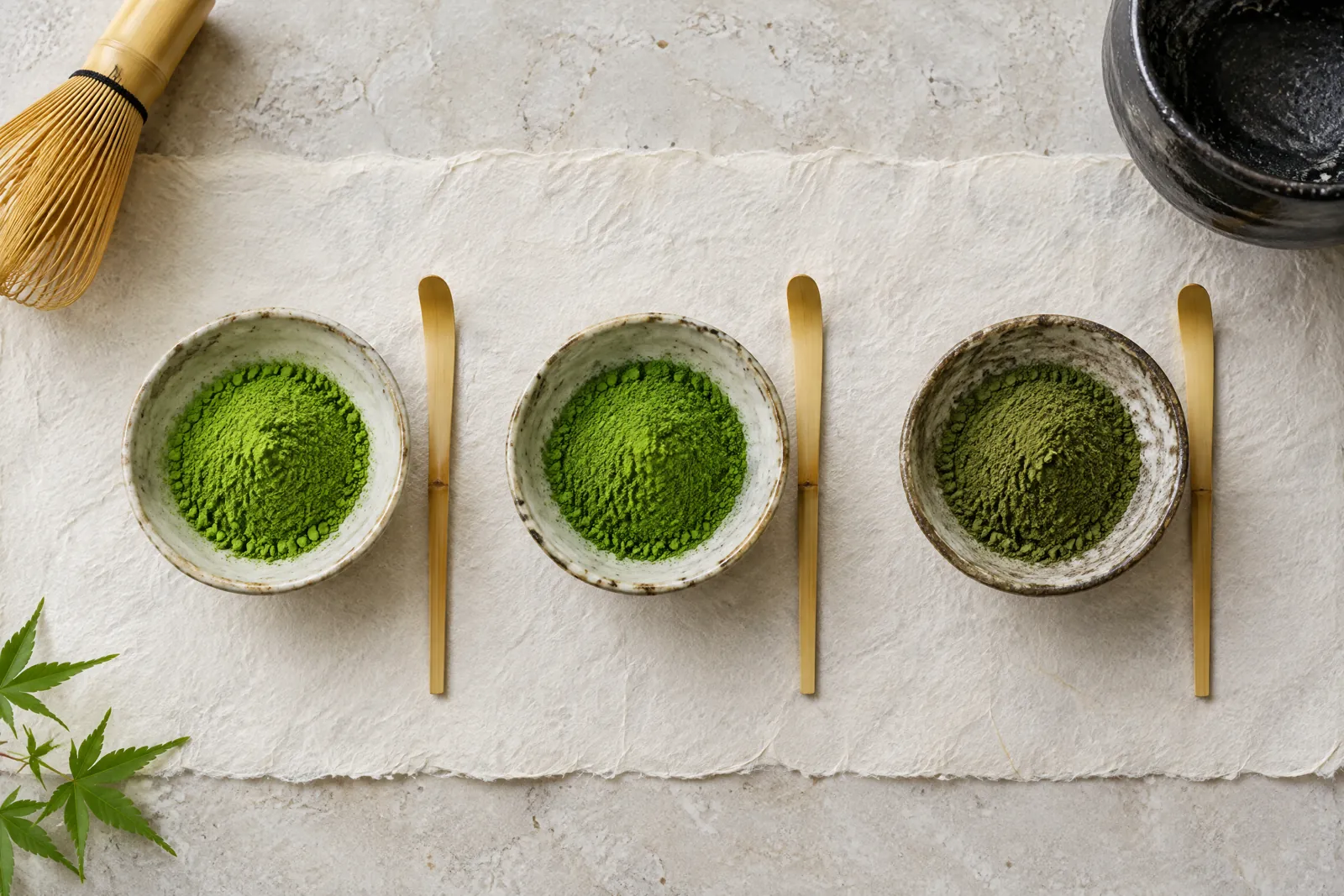
A grade label is useful only when it helps a buyer make a service decision. For cafés, restaurants, hotels and retailers, matcha grades for cafes come down to a few practical questions: Will it be whisked straight? Served with milk? Baked into a high-heat recipe? Sold for take-home use? And what is the matcha cost in each serving?
WA MATCHA’s range offers Ceremonial, Premium and Culinary Blend, plus Premium and Daily retail formats. Choosing by application helps control ingredient cost and gives staff a clear product story.
Key takeaways
- Ceremonial suits whisked matcha served on its own.
- Premium is the bar-and-kitchen choice for lattes, iced drinks, baking and brighter no-bake finishes.
- Culinary Blend is designed for breads, cakes, cookies and other baking-led work.
- Cost per serving is a better buying measure than bag price alone.
- Retail packaging should suit its destination: shelf, gifting or counter basket.
What grades mean in a business setting
There is no universal grade system that predicts how every matcha will perform. In purchasing, treat a grade as a guide to intended use, milling and sensory expectation. A powder for a whisked bowl may not be right for cookie dough or take-home retail.
In a whisked preparation, matcha is the focus, so colour, aroma, sweetness and umami are apparent. WA MATCHA Ceremonial “Tsuyuhikari” is for matcha served on its own and is made to order.
Milk, ice and food ingredients shift the target. A latte needs balanced matcha flavour alongside milk at a workable cost. In baking, flour and heat further change the outcome. Select the matcha that suits the finished recipe.
A considered program can use several formats: Ceremonial for a small straight-matcha offering, Premium behind the bar and in no-bake work, and Culinary Blend for pastry production.
Matcha grades for cafes: start with the menu
Whisked straight
Use Ceremonial “Tsuyuhikari” for matcha prepared with water and served without milk or other dominant flavours. As a rule of thumb, sift before whisking and use water around 70–80 °C rather than boiling water.
For businesses considering ceremonial matcha wholesale, account for the made-to-order process and discuss timing before a menu launch or retail allocation. The Ceremonial Tsuyuhikari 100 g format gives the relevant product and list-price reference.
Lattes and iced drinks
For a busy espresso bar, premium matcha for lattes is the practical choice. WA MATCHA Premium is bead-milled and supplied in 1 kg and 500 g trade bags. Choose a bag based on expected sales, storage and ordering rhythm.
A standard latte uses about 2 g. At list price, Premium 1 kg is approximately $0.77 per latte, and Premium 500 g is approximately $0.98. Use these figures to calculate the matcha input before milk, sweetener, cup, garnish and labour. Premium Matcha 1 kg is the large-format bar option. Premium also supports iced drinks and kitchen applications where a brighter colour is wanted.
Baking and pastry
Choose culinary matcha for baking when producing breads, cakes and cookies. WA MATCHA Culinary Blend is available in a 500 g kitchen bag at $120, and one bag is a valid order. Most baking sits near 3 g for every 100 g of flour, which is about $0.72 per 100 g flour at the published list price. This gives a useful starting point for formula costing and test bakes.
Heat fades matcha’s green faster in baking. When a visible green finish matters, match the powder to the application instead of expecting one recipe approach to work everywhere. For creams, glazes, icing and no-bake desserts, Premium keeps a brighter colour. See Culinary Blend 500 g for the baking format.
Retail and counter sales
Retail requires the same use-case thinking, with packaging added. Premium 30 g Tin is a standing retail option for shelf and gifting, sold in sixes. The limited Premium 20 g Pouch is intended for a counter basket and is sold singly while available. Daily 20 g Pouch is an everyday matcha in a small pouch, also limited and sold singly while available.
For a café extending its in-house program into take-home sales, place each format where it makes sense: the tin for a shelf or gift display, the Premium pouch for an add-on purchase, and the Daily pouch for everyday use. Keeping those roles clear makes the range easier for staff to explain and replenish.
Compare WA MATCHA formats and best uses
| Format | List price (CAD) | Best business use | Working cost or ordering note |
|---|---|---|---|
| Ceremonial “Tsuyuhikari” 100 g | $240 | Whisked matcha served on its own | Stone-milled; made to order; discuss timing |
| Premium 1 kg | $385 | High-volume lattes, iced drinks, baking and no-bake finishes | About $0.77 per latte at a 2 g dose |
| Premium 500 g | $245 | Lower-volume bar service and flexible kitchen use | About $0.98 per latte at a 2 g dose |
| Culinary Blend 500 g | $120 | Breads, cakes, cookies and production baking | About $0.72 per 100 g flour at 3 g matcha |
| Premium 30 g Tin | $45 | Shelf retail and gifting | Sold in sixes |
| Premium 20 g Pouch | $18 | Counter-basket retail | Limited; sold singly while available |
| Daily 20 g Pouch | $12 | Everyday take-home use | Limited; sold singly while available |
Published prices are list prices, with taxes and delivery extra. Discounts are available depending on order volume and trading relationship. Trade bags can be ordered from one bag, while Ceremonial is made to order. This allows a new café to test a core recipe without taking on a large opening assortment, and gives established operators a way to separate bar and bakery purchasing as demand grows.
Milling, colour and flavour
Milling is a meaningful distinction in this range, but it is not a blanket measure of suitability. Ceremonial is stone-milled, while WA MATCHA Premium is bead-milled. Connect the milling method to the intended service: Ceremonial is for a whisked standalone drink; Premium is positioned for lattes and baking.
Colour and flavour should also be judged in the final application. WA MATCHA leaf is shaded before picking. The shading raises theanine, associated with sweetness and umami, and lowers catechin, associated with bitterness; the leaves turn deep green. These qualities are immediate in a whisked drink. In a latte, the aim is balance with milk. In a cookie, it may be a recognisable matcha note and an appealing finished colour after baking.
Handling protects the buying decision. As a rule of thumb, keep opened matcha airtight, cool and dark, away from strong odours, and use it promptly after opening. Standardize recipes with a scale, sift when needed and record the method on the café preparation card. Repeatable handling is essential to a reliable drink or bake.
Build cost per serving into the order
Cost per serving gives a direct basis for deciding where a grade belongs. About 2 g of Premium in a latte is a defined input that can be compared with the cost of milk, packaging and labour. In the pastry kitchen, 3 g per 100 g flour offers a baseline for costing a batch. Track sales and waste by drink, bake and retail format rather than treating matcha as a single inventory line.
WA MATCHA holds stock locally in Victoria, BC, rather than sending each order from Japan. That can help when demand shifts mid-month, while good planning still means aligning bag size with usage. For formats, minimums, pricing and sampling, review WA MATCHA wholesale options.
If you are building or refreshing a matcha menu, request free business samples or see wholesale options to identify the right format for your drinks, baking and retail plan.
FAQ
Which matcha grade should a café use for lattes?
Premium is the intended behind-the-bar choice for lattes and baking. At a standard dose of about 2 g, Premium 1 kg is approximately $0.77 per latte at list price, while Premium 500 g is approximately $0.98.
Is Ceremonial matcha suitable for a large latte program?
Ceremonial “Tsuyuhikari” is intended for whisked matcha served on its own. For a large latte program, Premium is the practical fit because it is available in trade bags and bead-milled for the bar-and-kitchen role.
When should a bakery choose Premium instead of Culinary Blend?
Choose Culinary Blend for breads, cakes and cookies. Use Premium for creams, glazes, icing and no-bake desserts where a brighter colour is useful. Test each new recipe at your own dose and process.