For a professional pastry kitchen, culinary matcha for baking is not simply a flavour addition. It is an ingredient that must work with flour, fat, sugar, mixing method and oven heat while still delivering a recognisable green colour and clean tea character. A dependable starting ratio and a practical purchasing plan make it easier to develop recipes that can be repeated by the team.
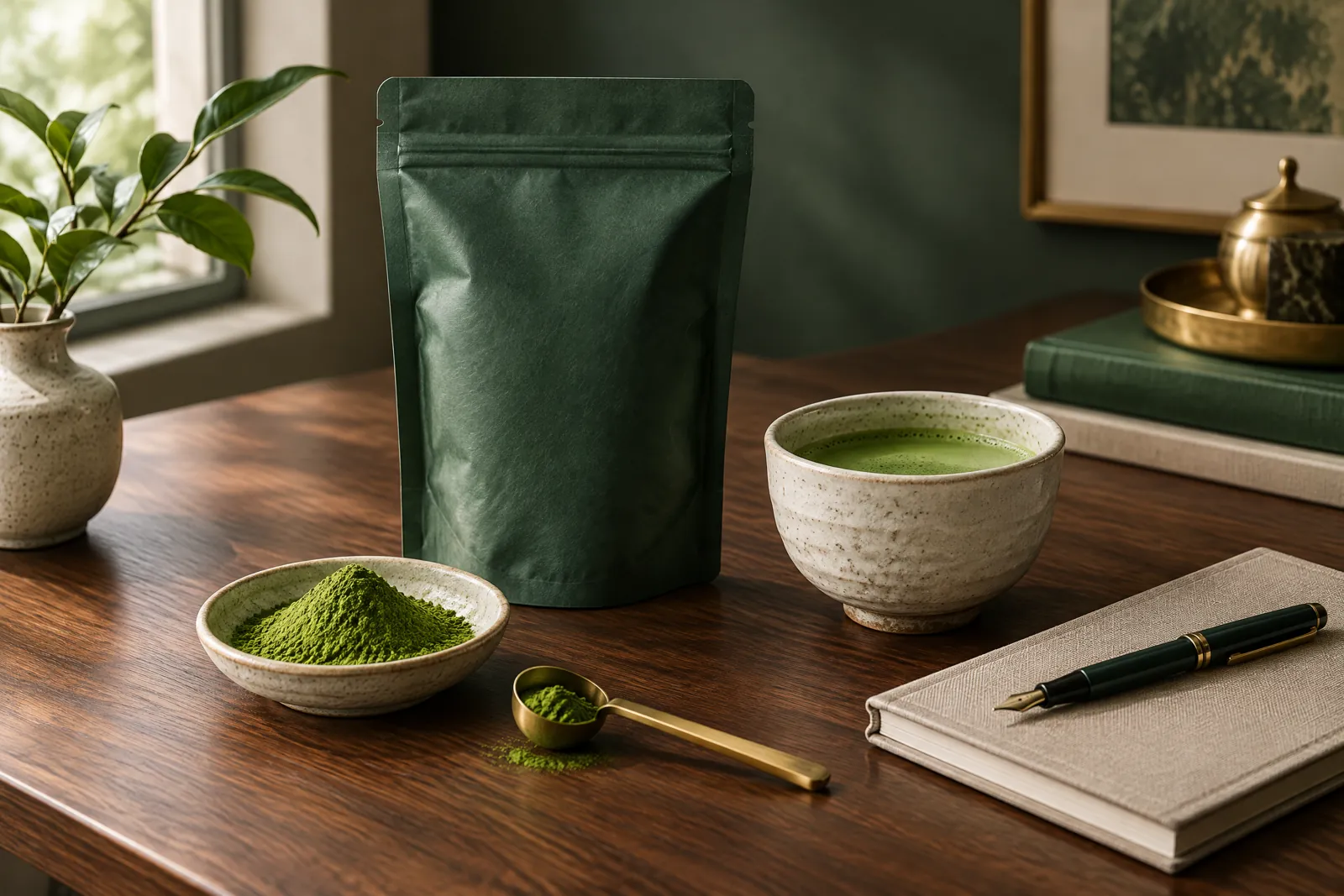
WA MATCHA Culinary Blend is intended for breads, cakes, cookies and creams. For Canadian kitchens seeking a workable matcha for bakeries programme, its 500 g kitchen bag provides a straightforward format for recipe trials and regular production. The sections below cover where to start with dosage, how to estimate ingredient cost, when a brighter-colour option may suit the finish, and how to handle the powder with care.
Key takeaways
- Start most formulas at about 3 g of matcha for every 100 g of flour, then adjust through tasting and production trials.
- WA MATCHA Culinary Blend 500 g is listed at $120, or $0.24 per gram; at the starting ratio, that is about $0.72 per 100 g of flour at list price.
- Oven heat can fade green colour. For creams, glazes, icing and no-bake desserts, Premium is the better fit when a brighter colour matters.
- Sift matcha and blend it evenly with dry ingredients before adding liquids. There is no minimum for trade bags: one bag is a valid order.
Start with a matcha baking ratio that your team can repeat
The most useful matcha baking ratio is one your kitchen can scale without changing the balance of the dough or batter. As a rule of thumb, begin near 3 g of matcha per 100 g of flour. A 1 kg flour batch, for example, begins around 30 g of matcha.
That ratio is a starting point rather than a fixed rule. A lightly sweet shortbread, enriched brioche and cocoa-forward cake will each present tea flavour differently. Sugar, dairy, chocolate, fruit, fermentation time and the degree of browning all affect how the final product reads. Run a small, controlled test before locking the formula: keep the base recipe steady, change only the matcha amount, and record the result after it has cooled.
| Production question | Practical starting point |
|---|---|
| How much to use? | About 3 g of matcha per 100 g of flour |
| How should it enter the mix? | Sift it, then distribute it through sugar or other dry ingredients |
| What should be tested? | Flavour, finished colour, sweetness balance and repeatability |
| When is a different grade useful? | Choose Premium for brighter creams, glazes, icing and no-bake desserts |
Cost culinary matcha for baking before the first large batch
Recipe costing should translate the gram weight in a formula into a clear ingredient number. WA MATCHA Culinary Blend comes in a 500 g bag listed at $120, before taxes and delivery. That works out to $0.24 per gram. At roughly 3 g per 100 g of flour, matcha contributes approximately $0.72 per 100 g of flour at list price.
For example, a 1 kg flour recipe using the starting ratio calls for about 30 g of matcha. At $0.24 per gram, the matcha portion of that formula is about $7.20 at list price. The same calculation can be applied to a smaller R&D batch or a larger weekly production run without changing the method.
Published prices are list prices, and discounts are available depending on order volume and trading relationship. Businesses can review trade ordering details, minimums and sample information on the WA MATCHA wholesale page. The Culinary Blend is currently in production and is expected to ship from October, so it is sensible to discuss planned production needs before building it into a launch schedule.
Choose the grade for the application, not only the recipe name
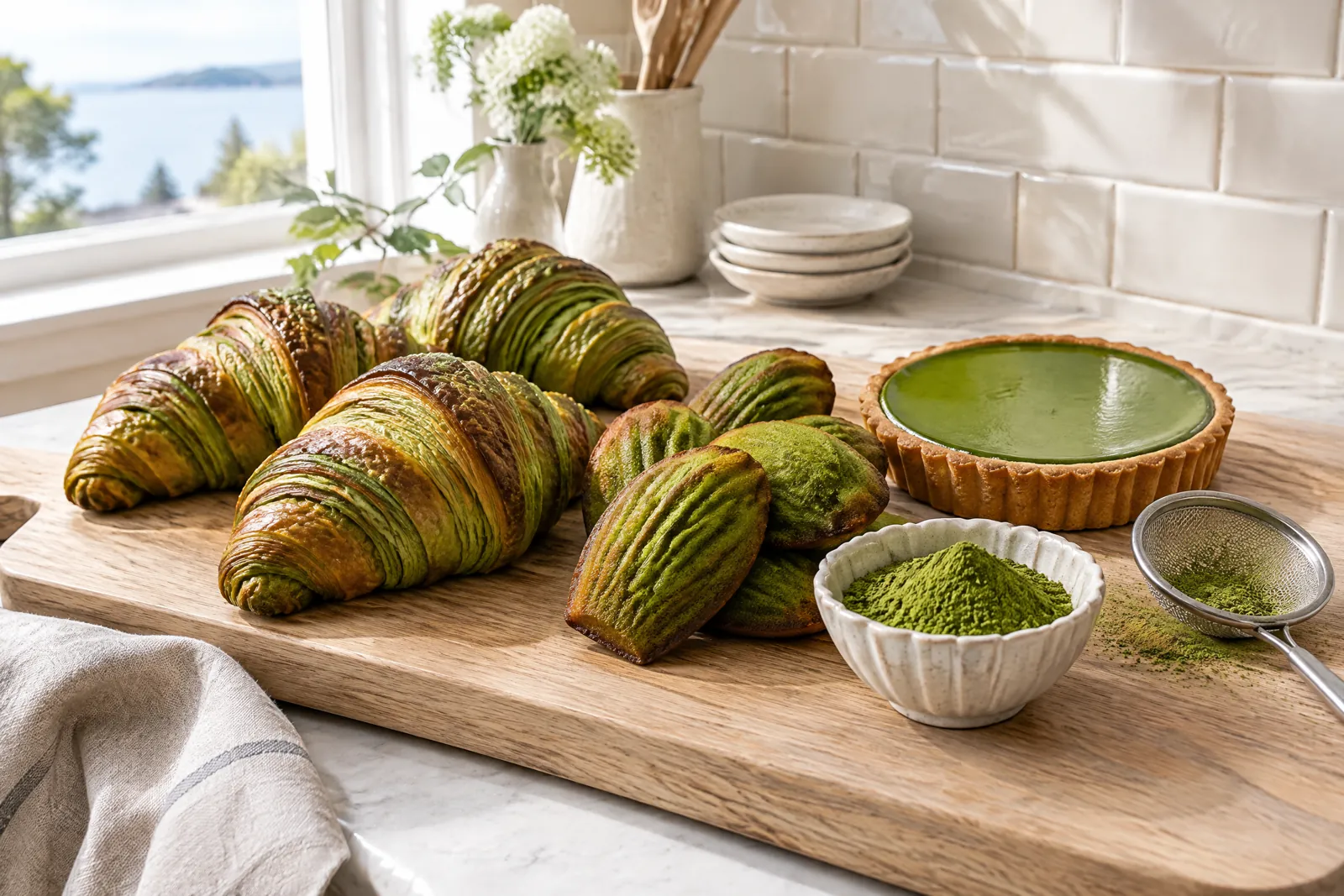
A baked matcha loaf and a pale green finishing cream place different demands on the powder. Culinary Blend is the kitchen option for breads, cakes, cookies and creams, where its role is integrated into a larger mixture. It is a practical choice when the recipe will see oven heat or when the matcha is one part of a more layered flavour profile.
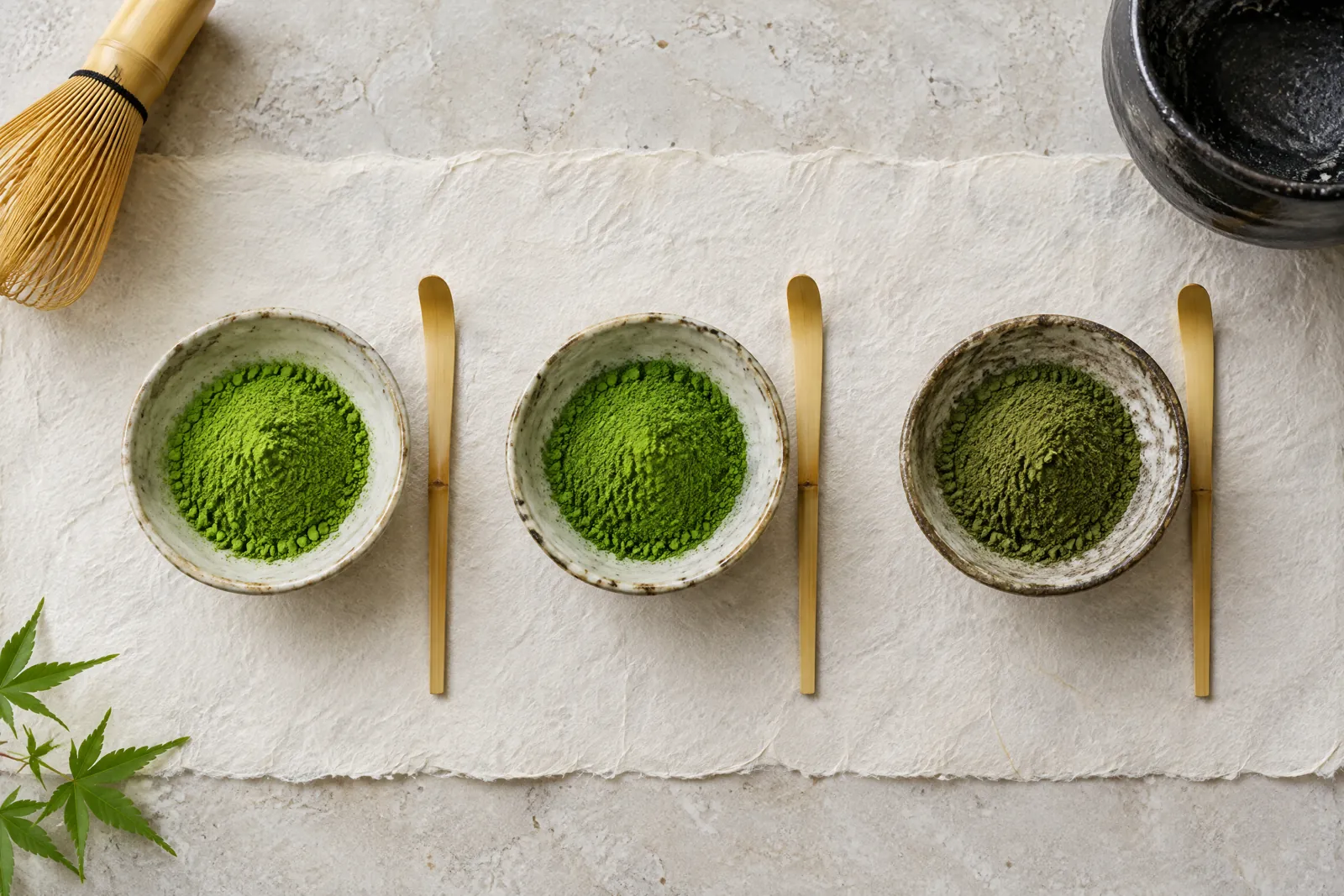
Heat fades matcha's green colour faster in baking. Where the matcha is visually prominent and receives little or no heat, WA MATCHA Premium can keep a brighter colour in creams, glazes, icing and no-bake desserts. This is not a reason to abandon a proven baked formula; it is a reason to specify the ingredient according to the finished application.
Think in terms of the pastry's last step. A green tea cake baked through to the centre can be developed with Culinary Blend. A whipped cream, ganache-style filling, glaze or buttercream that carries the visual identity of the item may benefit from Premium. Teams using more than one matcha should label containers clearly and maintain separate recipe specifications, so a finishing application is not made with the baking blend by accident.
Build colour and flavour into the mixing process
Good distribution is the first control point. Matcha is a very fine powder, so sifting it before use helps break up small clumps. For a dry dough or batter, whisking the sifted matcha into the measured sugar first can help spread the colour more evenly before it meets the flour and liquids. Alternatively, sift it together with the flour and other dry ingredients, then mix according to the established recipe method.
A few practical habits can make trials easier to assess:
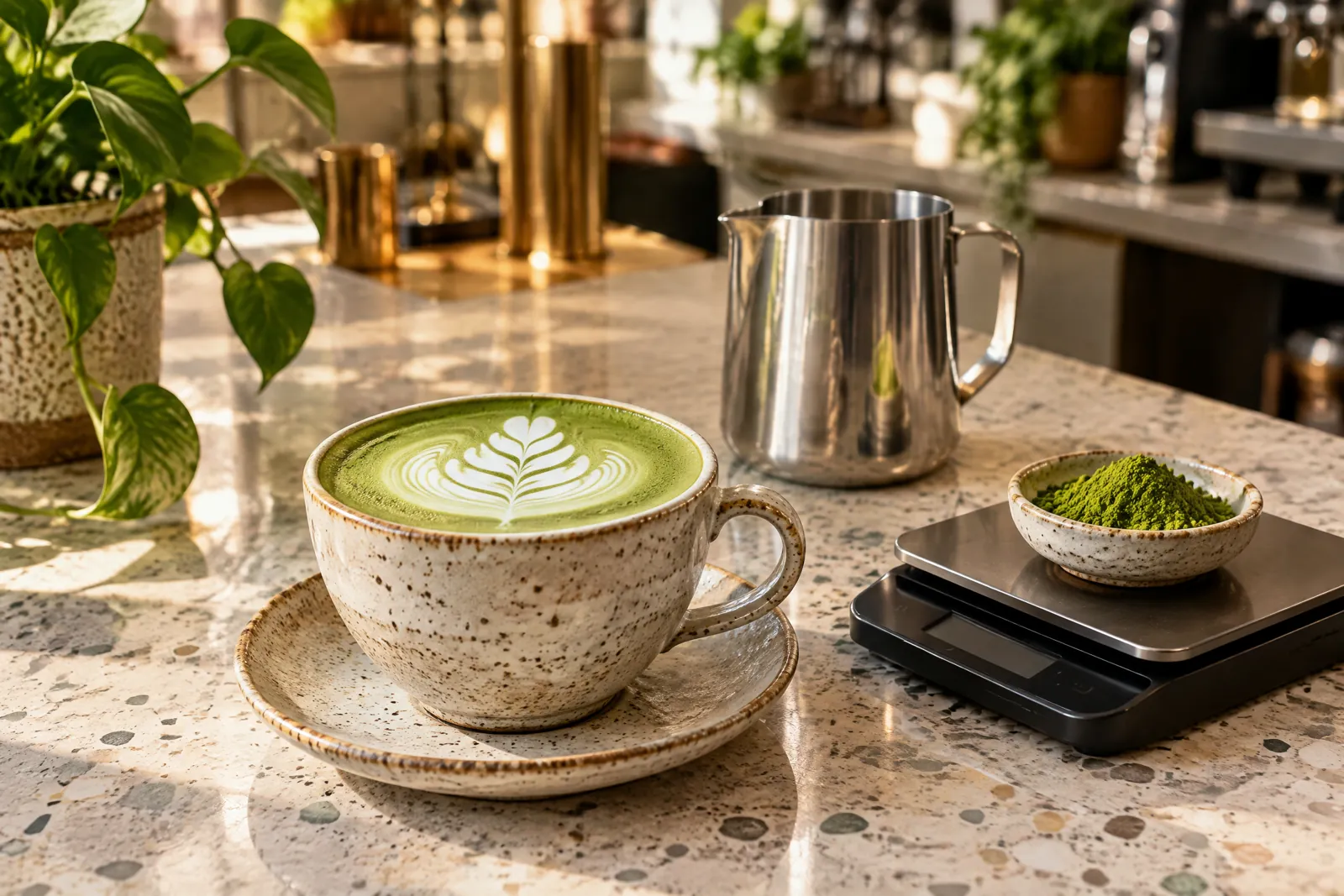
- Weigh, do not estimate. Use a scale that is suitable for small weights; a few extra grams can be noticeable in a small batch.
- Keep one variable at a time. When adjusting matcha quantity, avoid changing sugar, baking time or another major element in the same trial.
- Protect the powder between uses. As a general handling practice, keep matcha airtight in a cool, dark place, away from strong odours, and use it promptly after opening.
- Avoid judging colour too early. Review the fully cooled product, since browning and moisture settling can change the appearance from the first minutes out of the oven.
- Document the method. Record sieve step, mixing sequence, gram weight and bake setting in the production recipe so different team members can reproduce it.
Ordering for trials and ongoing bakery production
There is no need to wait for a large opening order to begin development. Trade bags have no minimum: one bag is a valid order. That gives a bakery or pastry kitchen room to test a signature cookie, seasonal cake or finished dessert before committing to a broader menu programme. When the formula is approved, the same gram-based costing can guide reorder planning.
WA MATCHA holds stock in Victoria, BC, allowing supply to move mid-month rather than being sent order by order from Japan. The matcha comes from Shizuoka, Japan; more detail on the producer, partner farms, shading and milling is available in the Shizuoka matcha origin story. For a culinary format built around breads, cakes, cookies and creams, visit the Culinary Blend 500 g product page.
For bakery teams, consistency comes from a clear sequence: choose the application, begin with the 3 g per 100 g flour benchmark, cost the formula by weight, and test the baked or finished result in its actual service format. That approach makes culinary matcha a manageable part of daily mise en place rather than a difficult special ingredient.
Request free samples for your business through WA MATCHA contact, or review ordering options and trade minimums on the wholesale page.
FAQ
What is a good starting amount of matcha for a bakery recipe?
Begin with about 3 g of matcha for every 100 g of flour. Treat this as a development benchmark, then adjust after testing the final flavour, colour and balance of the specific product.
How much does Culinary Blend add to the cost of a flour-based recipe?
Culinary Blend 500 g is listed at $120, or $0.24 per gram before taxes and delivery. At about 3 g per 100 g of flour, that is approximately $0.72 of matcha per 100 g of flour at list price.
When should a pastry kitchen use Premium instead of Culinary Blend?
Use Premium where brighter green colour is important in creams, glazes, icing and no-bake desserts. Heat fades matcha's green faster during baking, so the finished application should guide the choice.